
What Are Serological Pipettes?
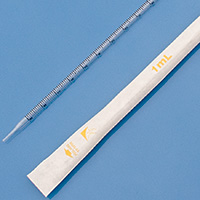
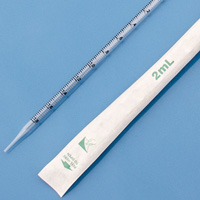
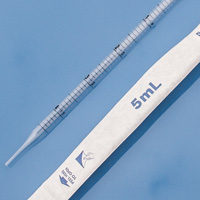
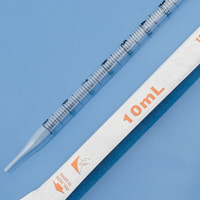
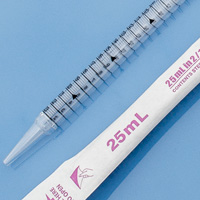
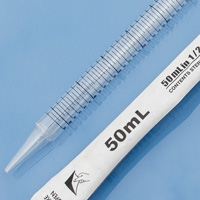
Serological Pipettes are made of polystyrene, they are transparent. Currently, we offer six different sizes, including 1ml, 2ml, 5ml, 10ml, 25ml, and 50ml. All our Serological pipettes are sterile, individually wrapped, DNase/RNase free.
With serological pipettes, you can transfer liquids measured in milliliters (ml). Usually, these pipettes come with graduation on the side, making it easy to measure precise quantities.
What Are Serological Pipettes Used For?
Serological pipettes are extremely efficient when it comes to mixing cell suspensions. But, you can also use them to mix reagents and chemicals. These pipettes are useful in moving colonies of cells for additional analysis during treatment or isolation of cell cultures.
| Specification | Packaging detail | Cat# |
| 1ml Disposable Serological Pipettes, Sterile, PS, Individual wrapped | case of 300 | MBC.50.00 |
| 2ml Disposable Serological Pipettes, Sterile, PS, Individual wrapped | case of 300 | MBC.50.01 |
| 5ml Disposable Serological Pipettes, Sterile, PS, Individual wrapped | Case of 200 | MBC. 50.02 |
| 10ml Disposable Serological Pipettes, Sterile, PS, Individual wrapped | Case of 200 | MBC. 50.03 |
| 25 ml Disposable Serological Pipettes, Sterile, PS, Individual wrapped | Case of 100 | MBC. 50.04 |
| 50 ml Disposable Serological Pipettes, Sterile, PS, Individual wrapped | Case of 100 | MBC. 50.05 |
FAQs
What are serological pipettes, and why are they essential in laboratory work?
Serological pipettes are precision instruments used to measure and transfer liquid volumes, typically ranging from 1 mL to 50 mL. They are essential for accurate liquid handling in various laboratory applications, including cell culture, reagent preparation, and chemical analysis.
What materials are serological pipettes made of?
Serological pipettes are commonly made from medical-grade polystyrene (PS) or borosilicate glass. Polystyrene pipettes are typically disposable and pre-sterilized, while glass pipettes are reusable and can be autoclaved for sterilization.
What are the differences between blow-out and non-blow-out pipettes?
Blow-out pipettes are designed to deliver the entire liquid volume, including the small amount remaining in the tip. Non-blow-out pipettes do not require this additional step. Blow-out pipettes are often marked with a single ring, while non-blow-out pipettes are marked with two rings.
How should I choose the right serological pipette for my experiment?
Consider the following factors:
- Volume capacity: Choose a pipette with a capacity that matches the volume of liquid you need to transfer.
- Material: Select between disposable polystyrene or reusable glass, depending on your laboratory’s needs.
- Sterility: Ensure the pipette is sterile if working with sensitive biological samples.
- Graduation markings: Choose pipettes with clear, easy-to-read graduations for accurate measurements.
Can I purchase serological pipettes in bulk for my lab in Canada?
Yes, Max Biochem offers bulk purchasing options for laboratories in Calgary, Toronto, Alberta, and Ontario. For bulk pricing and availability, please contact our sales team.
Are serological pipettes compatible with all pipette controllers?
Serological pipettes are designed to be compatible with most standard pipette controllers. However, it’s essential to ensure that the pipette’s size and design match the specifications of your pipette controller.
Why should I choose Max Biochem's serological pipettes?
Max Biochem’s serological pipettes are known for their precision, durability, and reliability. They are manufactured under strict quality control standards to ensure accurate liquid handling in your laboratory applications.